

When millennials experienced the phase that was never just a phase, together
WHEN IRONY FAILED, EMO TOOK OVER (2001–2008)

“I’m not okay”
—My Chemical Romance
When swing disappeared, seemingly overnight after 9/11, it wasn’t replaced by another dance craze. It was replaced by a contradictory language, one both isolated and collective.
Post‑9/11 teens and younger twenty-somethings didn’t want costumes or jokes. They didn’t see the need to completely hide their feelings anymore. They wanted direct, emotional articulation. Irony, once a shield, began to feel dishonest. The prevailing question shifted from “Isn’t this funny?” to “Is this real and honest?”
Emo answered that question.
Though emo had existed since the 1980s, its modern form crystallized in the early 2000s. Thursday’s Full Collapse was released on April 10, 2001. Jimmy Eat World’s Bleed American (briefly renamed Jimmy Eat World directly after 9/11) came out on July 24, 2001. These albums dropped months before a generation of young folks watched the towers collapse, and in retrospect, they feel like a prophetic hinge point. The music was urgent, confessional, and unashamed of its own emotional intensity.
Soon followed seminal bands like Dashboard Confessional, Brand New, Taking Back Sunday, My Chemical Romance, and Fall Out Boy. These bands outright rejected irony. The lyrics weren’t clever nods, or bored winks. They wrote about clearly articulated pains, and explored intense feelings. They were diary entries shouted (and sometimes screamed) into microphones.
This shift mirrored broader changes. Blogs were replacing zines. Social media and My Space’s “Top 8” were replacing scenes. Identity became more textual, and felt much more personal. Where the ska and swing movements of the late 90s were communal, performative, and outward‑facing, emo was solitary, internal, and earnest.
You didn’t dance to emo. You listened to it. You felt it.
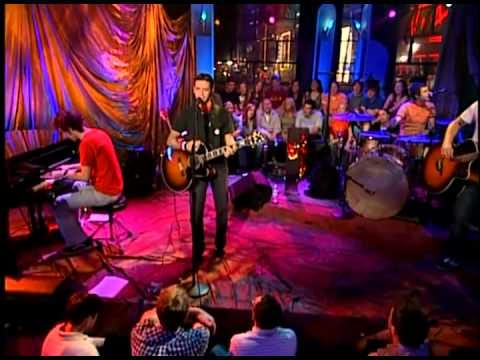
Youth culture didn’t become less theatrical, it became more confessional. The dominant mode was no longer parody or revival. It was vulnerability.
Emo didn’t just replace swing and ska aesthetically, it replaced them functionally. Where ska and swing had been about bodies in motion, emo was about interiority. It asked listeners to sit still and pay attention to the lyrics. The spectacle moved inward. Instead of dancing together, kids memorized lyrics alone.
The early 2000s provided the perfect conditions for this shift. Suburban isolation was increasing. The internet was no longer novelty; it was infrastructure. Feelings that once would have been worked out wordlessly in public, on dance floors, in basements, at local rock clubs, were now being processed privately, online, and in plain text. Emo didn’t invent this condition, but it gave it a soundtrack.
There was, inevitably, a darker gravity pulling beneath emo’s rise, one that ran parallel to its insistence on honesty. As the genre normalized public discussions of pain, it also coincided with a visible increase in conversations around anxiety, depression, and self‑harm among young people.
Emo didn’t invent these struggles, but it gave them a vocabulary at a moment when many listeners lacked healthier outlets. The line between articulation and fixation was not always clear, and for some, the repetition of pain being sung, shared, and echoed back became less cathartic than recursive.
Part of this can be understood as a failure of context. The early-to-mid 2000s were marked by a highly televised, deeply unpopular war whose emotional consequences were difficult to discuss openly, especially for adolescents and young adults without political language or institutional power.
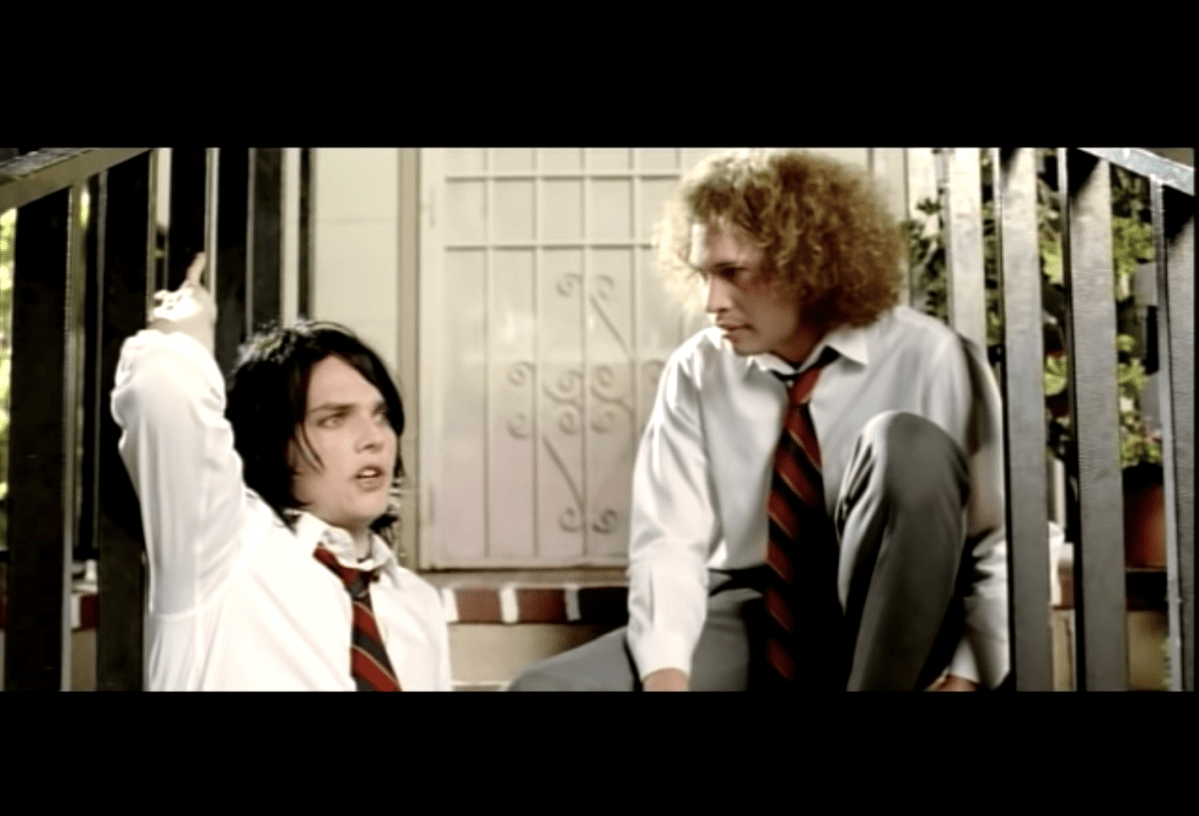
At the same time, an entire generation was processing September 11 not as history, but as lived trauma. A generation witnessed the death of their childhood in classrooms, on television screens, and through the ambient fear that followed.
There were few sanctioned spaces to vent that fear honestly. Emo, for better and worse, became one of the only places where that weight could be named at all. When private pain lacks public processing, it tends to turn inward. The music didn’t cause that turn, but for many, it became the mirror where it was first recognized.
Even so, that same emotional openness, however imperfect, also created a shared language that allowed many listeners not just to sit with pain, but to recognize one another across it.
A handful of records solidified the template.
Taking Back Sunday’s Tell All Your Friends (2002) weaponized interpersonal drama, turning best-friend-turned-rival breakdowns and romantic grievances into screaming call‑and‑response anthems. The album sounded chaotic but structured, its dueling vocals mimicking arguments that made listeners feel like part of the conversation. It wasn’t ironic. It wasn’t aspirational. It was accusatory, and wildly influential.
My Chemical Romance went bigger. Their early work flirted with punk urgency, but by Three Cheers for Sweet Revenge (2004), they had fused emo’s confessional core with theatrical excess. Violence, romance, grief, and self‑mythology were no longer subtext, they were the text. Emo stopped pretending to be small. It learned how to headline, offering a glimpse of the supernova coming in The Black Parade (2006).
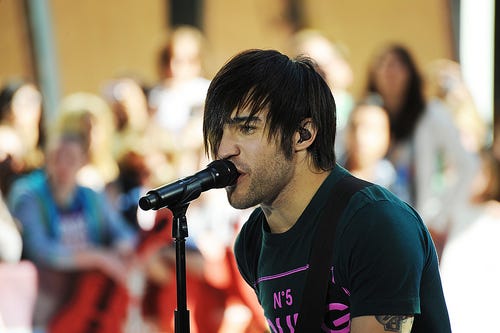
Then came Fall Out Boy, whose rise marked emo’s final transformation into pop. Take This to Your Grave (2003) carried hardcore DNA, but From Under the Cork Tree (2005) perfected a new mode: hyper‑literate, self‑aware, and emotionally maximalist. Fall Out Boy didn’t abandon irony, they retooled it, with tracks such as the opener, “Our Lawyer Made Us Change the Name of This Song So We Wouldn’t Get Sued.” Pete Wentz’s lyrics and self-consciously overwrought song titles helped us laugh again. The humor was back, but now it was nested inside confession, not used to deflect it.
Around these pillars orbited an enormous supporting cast, bands that thrived on Warped Tour stages, mid‑day MTV slots, and burned CD‑Rs passed between friends. The Used. Hawthorne Heights. Senses Fail. Silverstein. Story of the Year. From First to Last. Armor for Sleep. A Static Lullaby. Cute Is What We Aim For. Boys Like Girls. The Academy Is…. Plain White T’s. Some were one‑hit or one-album wonders. Some burned bright for a summer. All contributed to the sense that emo wasn’t a genre, it was a shared language, and it wasn’t just a phase, mom.
Emo didn’t become the zeitgeist by being forced down anyone’s throat on rock radio. In fact, most hyper-masculine “Nothing but Rock” stations preferred to keep playing decades-old hits from AC/DC or Metallica rather than the latest single from Matchbook Romance.
The virality wasn’t corporate sponsored, at least not at first. The music spread organically out of local hardcore scenes, platforming bands from touring in broken-down vans to being part of the zeitgeist, almost overnight.
The rise of file‑sharing platforms like Napster (launched in 1999) and later LimeWire fundamentally altered how people found new music. For the first time, discovery was detached from geography.
A band playing basements in New Jersey or VFW halls in Florida could suddenly be heard by thousands, then millions of listeners who had no connection to the local scene that birthed them. Songs were no longer filtered through labels, radio programmers, or MTV rotations. They were passed directly, person to person, at the speed of curiosity.
This discoverability was a godsend for emo, a genre whose audience already prized intimacy and lyrical specificity. File sharing showed no bias for polished singles. If a song hit hard, it spread. If it didn’t, it vanished. Kids searched band names, downloaded entire discographies, mislabeled tracks, live demos, leaked EPs.
Then came MySpace, which turned discovery into identity.
Bands no longer needed distribution deals to build audiences. A profile, a song player, and a comment section were enough. Fans were no longer just passive listeners, they interacted, reposted, embedded, and evangelized. Scenes stopped thinking locally and rolled out globally.
By the mid‑2000s, emo dominated MTV. Music videos became mini‑melodramas: rain‑soaked streets, eyeliner‑streaked faces, suburban ennui rendered cinematic. TRL, once the domain of boy bands and iced-out, necklace-adorned braggadocios, now hosted bands whose lyrics read like open journals. Emo had crossed the final threshold: it was no longer reacting to the mainstream. It was the mainstream.
But even as emo hijacked MTV, MTV itself was losing relevance.
The same technological shifts that helped emo spread (file sharing, social media, burgeoning video platforms) also began dismantling the machinery sustaining it.
YouTube launched in 2005. Streaming followed. The monoculture fractured. No single channel could dictate taste anymore. Record labels lost control.
It was an industry-wide shift. Music stopped filtering top‑down and started moving sideways. The gatekeepers lost their grip. And once that happened, no genre, not emo, not punk, not anything, could ever fully own the center again.
Emo didn’t vanish, but it splintered. Its intimate language and confessional style lived on in pop, hip‑hop, and internet confession, but its moment as a movement faded.
The Warped Tour washed away. MTV stopped playing music. The center did not hold.
Which, in its own way, completes the arc.
Swing and ska died because history made irony untenable. Emo rose because sincerity felt necessary. Emo declined not because sincerity failed, but because there were suddenly too many places to be sincere at once.
Teens didn’t stop feeling. They just stopped feeling collectively.
FUN FACTS:
• Full Collapse (2001) is often cited as the album that bridged post‑hardcore and mainstream emo.
• During its heyday, not one of these bands called themselves “emo.” Emo was a pejorative in the mid-2000s, and didn’t become super accepted until after the fact.
• Dancing largely disappeared from alternative youth spaces during this period. Instead of dancing, we pogoed. Ask your parents, it’s not gross.
For updates on Mike DC’s expanding emo-influenced video game fantasy world of Aztaeron, go to authormikedc.com.